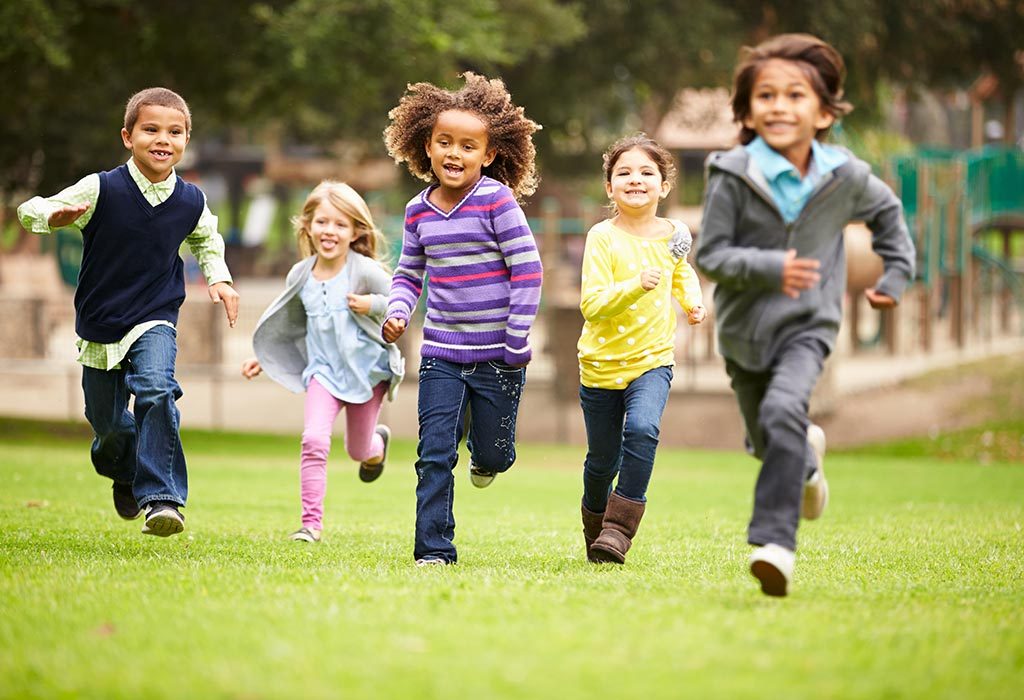
Proper exercise increases children's mobility. Anything that stimulates children is good for them.
The benefits of regular exercise for children include
-
Improves heart function and respiration
-
Build stronger bones and muscles
-
Weight control
-
Reduce the risk of health diseases such as heart disease, cancer, type 2 diabetes, high blood pressure, and osteoporosis
-
Improve symptoms of anxiety and depression
-
Jumping increases the heart rate and moves the whole body. Jump is a wonderful brain booster. Jumping involves the left and right hemispheres of the brain and improves function.
Ask your children to move their legs forward and their hands back, then lift their hips off the ground to walk like a crab.
Ask your children to walk like a bear. Bear walking is what we call a whole body skill because it involves the whole body. It also increases the child's geometric and spatial understanding and is an exercise that fully engages the brain and body.
Superman's movement strengthens the back, neck, buttocks, and thigh muscles and is also very effective in improving the atrial system (part of the ear for balance).
The benefits of transverse movements are
-
Improve brain function
-
Increased focus
-
Improve coordination
When making a Frankenstein motion, children are asked to hold their hands straight forward like a Frankenstein monster (or a zombie), then bring one foot straight forward so that it is almost parallel to the ground.
The benefits of traction are
-
Reduce the risk of injury
-
Increase the range of motion
-
Increase flexibility
-
Increase muscle strength
-
Reduce anxiety
In the exercises, you move the beautiful butterfly with the children to kill their body while concentrating.
Types of physical activity that should be considered for children every week
Encourage your child to do the following activities for at least 60 minutes 3 days a week:
-
Aerobic activity
-
Strengthen muscles
-
Strengthen bones
Suitable exercises for children
Regular physical activity is an important part of the overall health program, especially for growing children. Being active not only improves a child's physical health but also brings cognitive and emotional benefits such as improved attention span and mental well-being.
It is recommended that children under 6 years of age be regularly active during the day and that older children and adolescents be physically active for at least 60 minutes each day.
4 ways to increase physical activity at home
1. Set a goal
Talk to your child about the benefits of physical activity and use the goal he or she wants to achieve. Achieving small and incremental goals leads to long-term healthy habits.
2. Be creative
To keep sports fun for children, diversity is a key condition. Ask your child which activity he likes the most and try to do the same physical activity to enjoy it.
3. Use online resources
Although watching TV and working with mobile phones is often a barrier to physical activity, it can be one of the best tools for finding a variety of physical activities at home.
4. Make exercise a family priority
If you want to get your child moving, the best way to do that is to set an example for yourself.
Indoor exercises suitable for children
Outdoors give children a lot of freedom to explore and play.
Here are some ideas for indoor exercises for children
-
Distribute exercise videos suitable for children online.
-
Do exercises using bodyweight such as pushing, squatting, or climbing
-
yoga
-
Perform jumping movements
-
Dancing to music
-
Balance on one leg
-
Fill a balloon and do not let it touch the ground.
-
Fours walk
-
Rope game